Why our Alocasia drops an old leaf for every new one
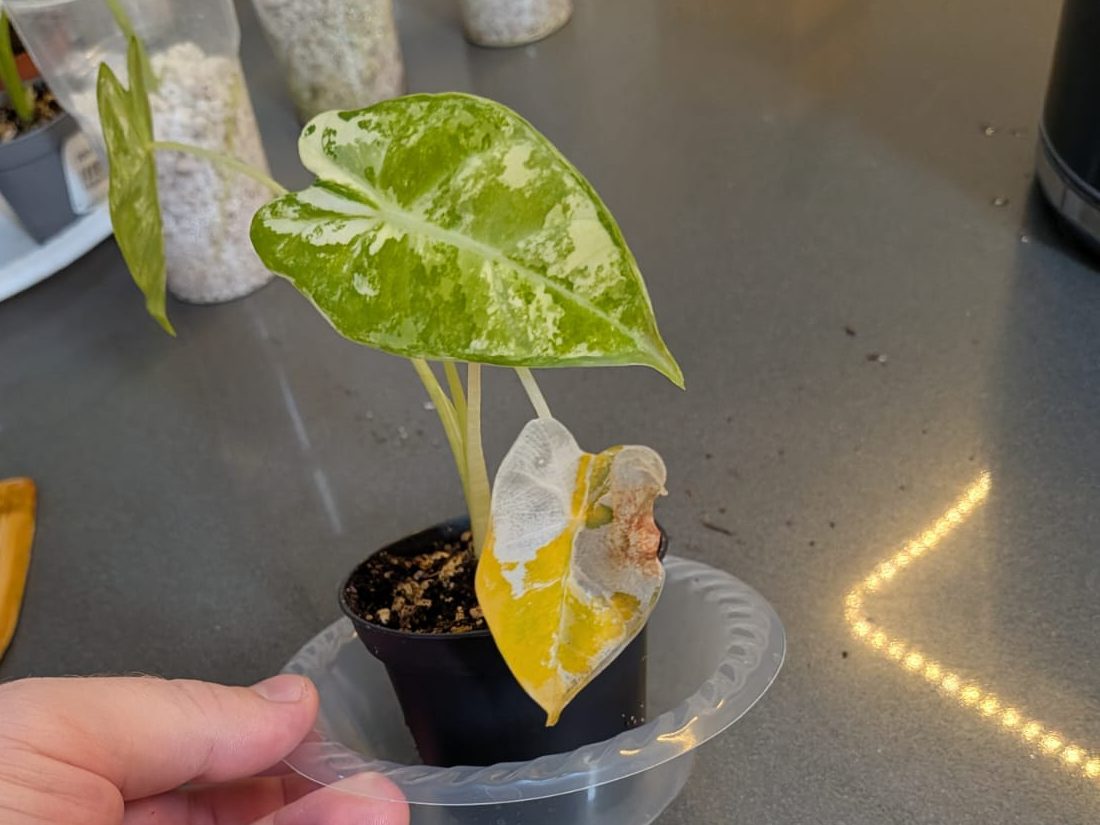
The photo at the top of this post is our Alocasia Frydek variegata. It has one big, healthy leaf, green and creamy white, and below it an old leaf that is turning yellow, with papery white patches and a reddish brown smudge.
The first time you see this on a plant you care about, it is alarming. It looks like the start of something bad. It is not. This is one of the most normal things an Alocasia does, and once you know the pattern, you stop worrying about it.
One in, one out
Alocasias tend to keep a fairly fixed number of leaves. A small plant might hold two or three; a bigger one a few more. When the plant starts making a new leaf, it often takes the energy and nutrients for it from the oldest one. The old leaf slowly yellows, dries and drops, and the new one takes its place.
So with an Alocasia, a yellow old leaf very often means that something good is happening: the plant is growing.
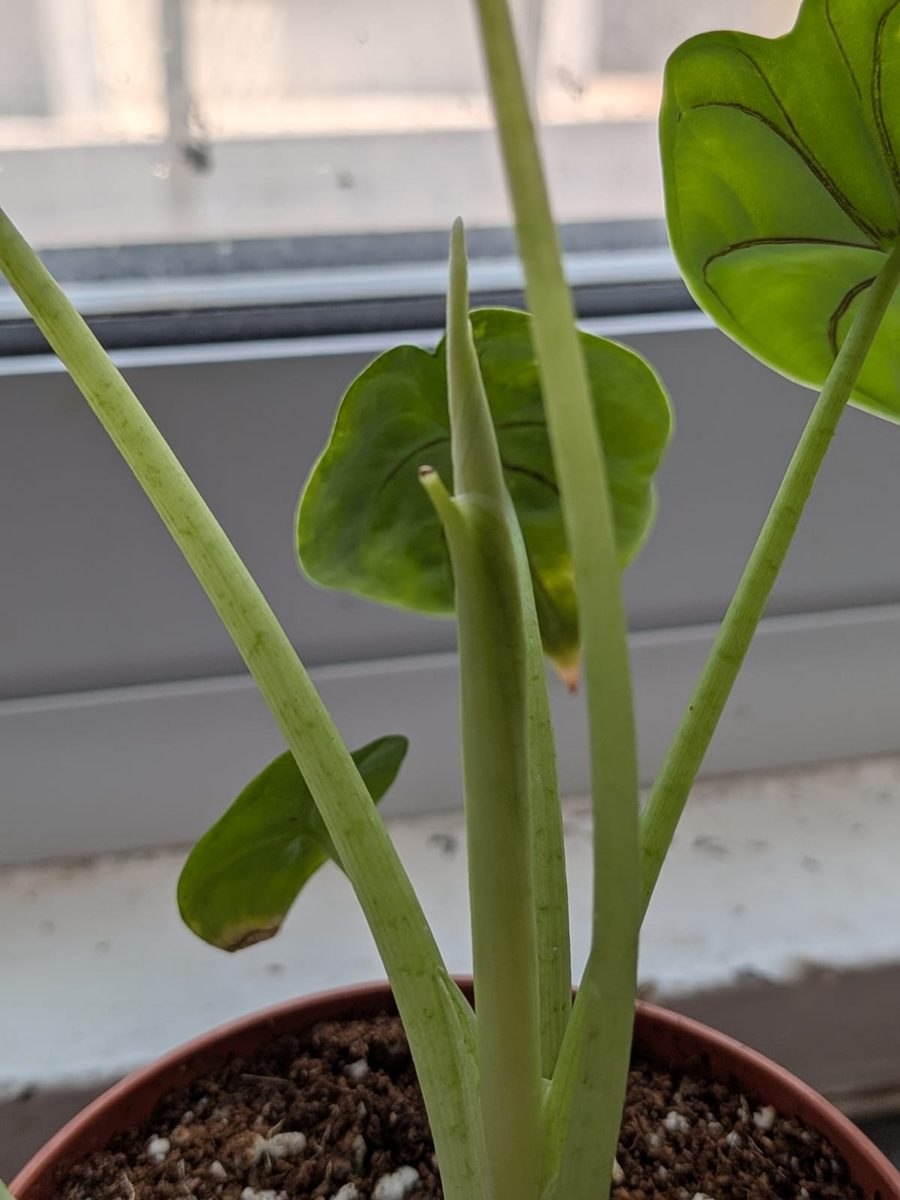
The part that confuses people is the timing. The old leaf often starts to fade before you can see the new one. The new leaf forms inside the stem of the previous one and only shows itself after a while, so for a week or two it looks as if the plant is simply losing a leaf for no reason. Then a new spike appears, unrolls, and the plant is back to the same count.
If you see one old, low leaf going yellow while the rest of the plant looks fine, the best thing to do is nothing. Let it finish. The plant is still drawing what it can from that leaf. Once it is fully yellow or dry, you can cut it off near the base, or wait until it comes away with a gentle pull.
And what not to do: do not rush to fertilize, water more or move the plant because of one old leaf turning yellow. A sudden change in light, position or watering stresses an Alocasia far more than the leaf itself, and can make several leaves drop at once.
The brown on the white is normal too
Our Frydek is variegated: parts of its leaves are creamy white instead of green. Those white parts have little or no chlorophyll, so they cannot make food the way the green parts do, and they are more delicate.
On an older leaf, it is normal for the white areas to turn papery, and to pick up reddish or brown patches, like the ones you can see on the yellowing leaf in our photo. That is the white tissue ageing faster than the green, not a disease. Variegated plants simply wear their age more visibly.
What would worry us is brown that spreads fast across a new leaf, or dark, wet looking patches with a yellow ring around them. Those point to other problems. Papery brown on old white areas does not.
When a yellow leaf is not normal
The one in, one out pattern is reassuring, but it only covers one leaf at a time. These are the signs that something else is going on:
- Several leaves yellow at once. One old leaf is normal. Two or three going together is not.
- The new leaf is yellow, or the newest leaves are smaller each time. The plant is struggling to grow, not just replacing.
- Soft, mushy stems at the base. Often the sign of a mix that has stayed too wet, and of roots starting to rot.
- Webbing or fine speckles on the leaves. Spider mites love Alocasias. We wrote about the time they got almost all our plants.
- Every leaf drooping at once. Often too much or too little water, or a sudden cold spell.
If you see any of these, our guide to yellow leaves helps you work out which one it is.
The two things that matter most
Looking after Alocasias, two lessons stand out for us above everything else.
Light is super important. An Alocasia in poor light grows slowly, uses very little water and stays wet for days after watering. That slow, wet state is where most problems begin. A variegated plant like the Frydek needs even more light than a green one, because the white parts do not help make food. Give it the brightest spot it can have, out of harsh direct midday sun. Our post on low light plants explains why an Alocasia is not one of them.
A bit dry is better than overwatered. If you have to make a mistake, make it on the dry side. An Alocasia that is a little thirsty droops and then recovers quickly after a drink. One that sits in wet mix can rot at the roots, and that is much harder to come back from. If you are not sure whether it needs water, wait a day and check again.
These two are connected. More light means the plant uses water faster, which means the mix dries properly between waterings, which keeps the roots healthy. Get the light right, and watering becomes much easier.
What we do now
When an old leaf on one of our Alocasias starts to turn, we look at the rest of the plant. If everything else looks healthy and it is just the oldest leaf, we leave it alone and wait for the new one. More often than not, a few weeks later there is a new leaf, and the plant has the same number of leaves it had before.