Low-light houseplants that really cope
Not every home has a sunny windowsill. Plenty of us live with north-facing rooms, shaded balconies behind a building, or flats where the only free shelf is two metres from the glass. The good news is that a handful of houseplants cope with this far better than the rest. The honest news is that "low light" does not mean "no light", and no plant lives in a windowless cupboard for long.
This guide explains what low light really means in a home, which plants forgive it, and how to look after them, because a plant in dim light behaves differently from the same plant in a bright spot.
What "low light" means
Plants make their food from light. The less they get, the less they grow, and the less water they use. A low-light plant is not one that likes the dark. It is one that can make enough food from a modest amount of light to stay alive and healthy, usually growing slowly.
At home, a rough way to sort a room:
- Bright light: close to a window, with the sun or a very bright sky falling on or near the plant for much of the day.
- Medium light: a few steps from a bright window, or a window that gets only a little direct sun.
- Low light: a room with a small or north-facing window, or a spot well away from any window, where you can still read comfortably without switching on a lamp.
That last test is useful. If you can read a page in the spot during the day with no lamp, a tough plant can usually live there. If you cannot, the plant will slowly starve however well you water it.
Plants that cope
These are known as forgiving in dim rooms. None of them will race ahead in the shade, but they stay in good shape.
- Snake plant (sansevieria). Stiff, upright leaves that put up with neglect. See the snake plant care guide.
- ZZ plant. Glossy, thick-stemmed and very tolerant of both low light and missed waterings.
- Pothos. Trailing and easy, it keeps growing in modest light, though the leaves can lose some of their variegation. See the pothos care guide.
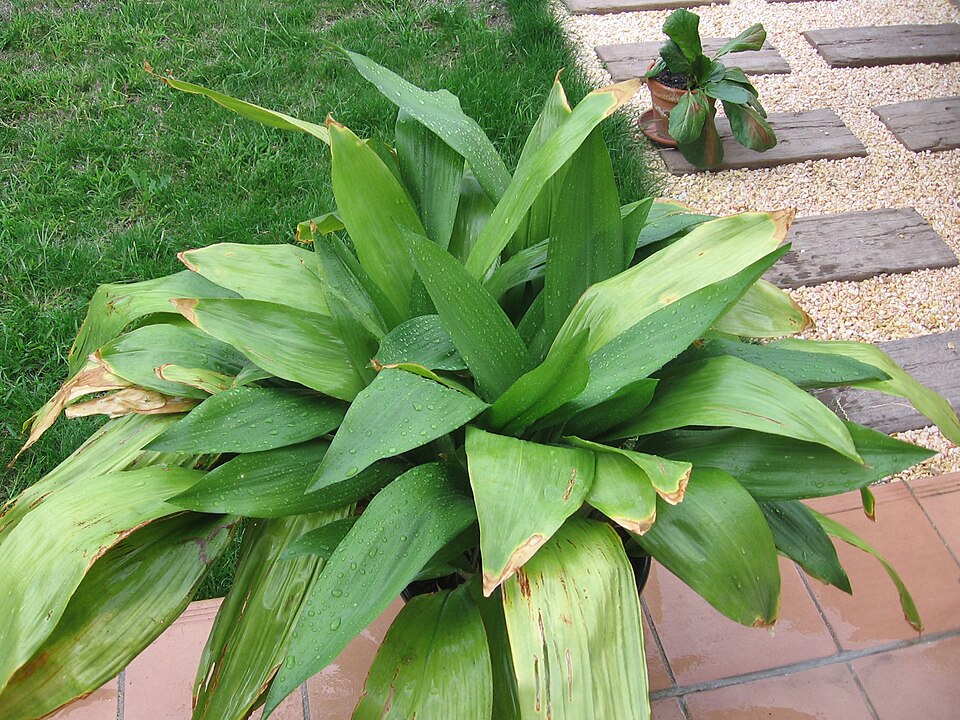
- Cast iron plant (aspidistra). Named for how much it survives. Slow, dark green and sturdy.
- Peace lily. Tolerates shade and shows you when it is thirsty by drooping.
- Chinese evergreen (aglaonema). Patterned leaves, comfortable in dimmer rooms, with the darker-leaved kinds coping best.
- Parlour palm. A soft, feathery palm that stays happy away from direct sun.
Variegated plants, with white or cream patches, are the first to suffer in the dark. Those pale patches contain little green pigment, so the plant has less to work with. Plain dark green leaves are the safer choice in a dim corner.
How a plant in low light behaves
Once you know what is happening, the symptoms make sense.
It grows slowly. That is normal. A plant in low light may put out only a few new leaves a year. Do not mistake that for illness.
It drinks much less. This is the point people most often miss. Less light means less food made and less water used, so the soil stays wet for longer. A plant that would need water weekly on a bright sill might need it every two or three weeks in a dim corner. The guide to how often to water houseplants explains how to check the soil before every drink.
It needs very little fertilizer. A plant making little food cannot use much extra. If you feed at all, use a weak dose and only in the growing season, as in the fertilizing guide.
It may lean or stretch. When a plant reaches for light, it grows long, pale stems with small leaves far apart. This is called etiolation. If you see it, the plant is telling you the spot is too dark.
Signs a spot is too dark
Even tough plants have limits. Watch for:
- long, thin, pale new growth with gaps between the leaves
- the plant leaning hard toward the window
- leaves turning yellow and dropping, even though watering is careful
- a variegated plant turning plain green
- soil that stays wet for weeks, which invites rot
If you see these, move the plant closer to the window, rotate it so that all sides get a turn, or give it a better spot for part of the year.
Ways to get more out of a dim room
You do not have to accept the shade. A few small changes help:
- Clean the window and the leaves. Dust on a leaf blocks light. Wipe leaves gently with a damp cloth from time to time.
- Use light colours. A white wall or a mirror opposite the window bounces more light onto a plant.
- Move plants, not furniture. A shelf by the window is better than a table across the room. Even a step or two closer makes a difference, because light fades quickly with distance.
- Rotate the pot a quarter turn every week or two so the plant grows evenly.
- Swap plants around. Give a plant a few weeks near the window, then let another take the turn.
- Consider a grow light. A simple full-spectrum LED lamp, placed above the plant and switched on for several hours a day, can turn an impossible corner into a workable one. Follow the lamp's own guidance on distance and hours.
Care in the shade, step by step
- Check the soil first, always. Wait until it is dry to the right depth for the plant before watering.
- Use a pot with drainage. Slow-drying soil is the main danger in low light, so water must be able to leave. The pot and drainage guide goes into this.
- Water less in winter. Short days make a dim room even dimmer. See houseplant care in winter.
- Do not repot too soon. A slow plant takes years to fill a pot. Repot when roots really crowd, as the repotting guide describes.
- Watch for pests anyway. Damp soil in a dim room suits fungus gnats, which the fungus gnats guide covers.
Which plant for which problem
If your room is dark and you travel, choose a snake plant or a ZZ plant. If you want something trailing for a shelf, choose pothos. If you like flowers and do not mind a plant that tells you when it is thirsty, try a peace lily. If you want something that nearly ignores you, the cast iron plant is a good pick.
Whatever you choose, give it a week or two to settle. A plant moved from a bright garden centre into a dim room often drops a leaf or two while it adjusts. That is a plant recalibrating, not dying.
A last word on realism
Low-light plants are survivors, not sun-lovers in disguise. Place them where they can live, treat the soil carefully, and be patient. If you keep a note of each plant's spot, its watering dates and how it looks, you will soon see which corners really work in your home and which only look good on paper.