A mushroom grew in our Monstera's pot
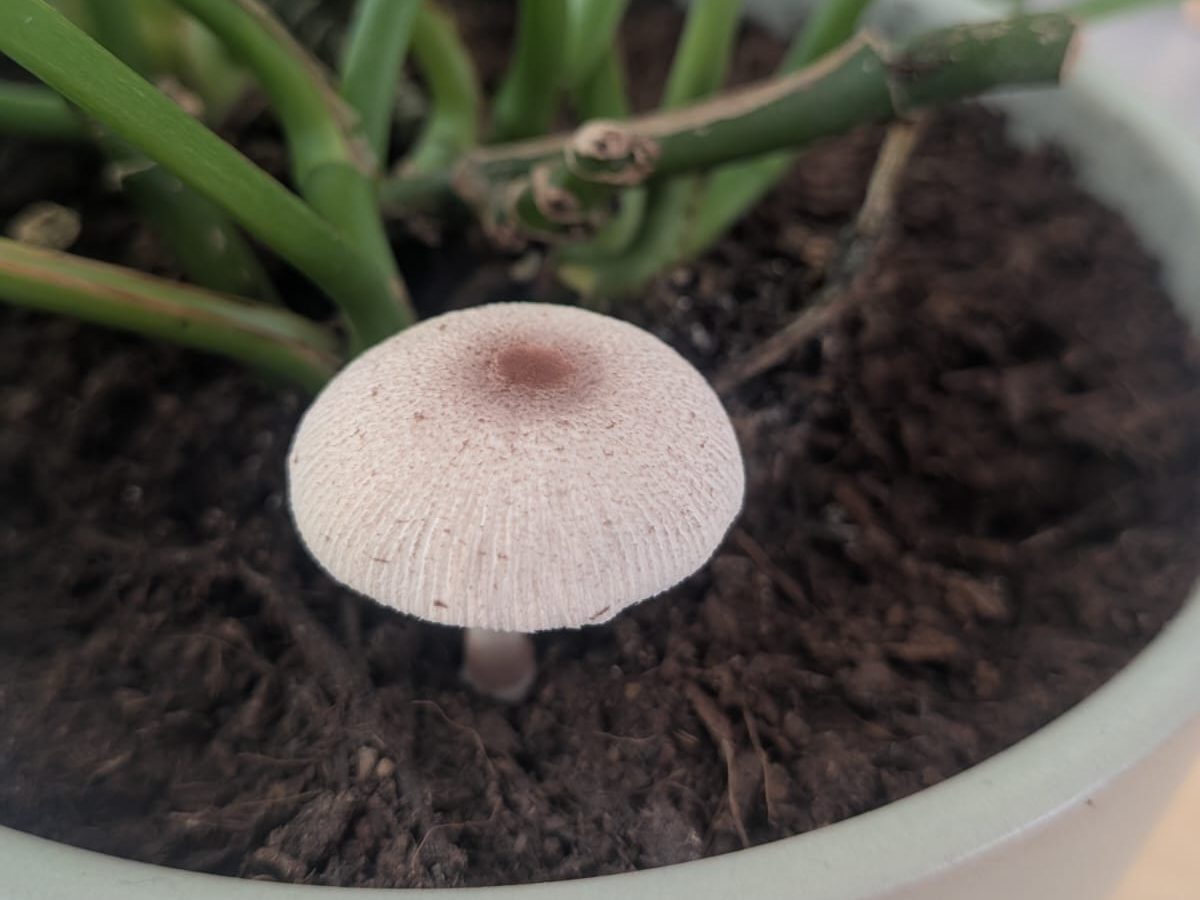
One morning there was a mushroom in our Monstera adansonii.
Not a mould, not a bit of fluff on the surface, but a proper little mushroom: a pale, umbrella shaped cap with a brown spot in the middle, standing on a thin white stem right among the stems of the plant. It had not been there the day before.
If this has happened to you, the first question is whether the plant is in danger. The short answer is almost certainly not. Here is what it is, why it shows up, and what we did.
What it is
Mushrooms in houseplant pots are common, and most of them belong to a small group of fungi that live happily in potting mix. The best known is a bright yellow one, often called the yellow houseplant mushroom. Ours was not yellow but pale, almost white, with fine lines running from the centre to the edge of the cap and a brown spot on top. Close relatives of the yellow one look much like that.
We are not mushroom experts, and you do not need to be one either. Identifying a mushroom to the exact species from a photo is hard even for people who know what they are doing. What matters for the plant is the same whichever kind it is.
The mushroom you see is only the fruit. The fungus itself lives in the soil as fine threads, feeding on dead organic material: bits of bark, peat, coir and old roots. Most of the time you never see it. A mushroom pops up when conditions are just right: warm, humid, and a mix that has stayed moist for a while.
Is it bad for the plant?
In almost every case, no. These fungi feed on dead material, not on living roots. They are not a disease, they do not attack the Monstera, and they do not compete with it in any way that matters. Some people even see them as a sign of a living, healthy mix.
What a mushroom does tell you is something about the conditions in the pot:
- The mix is rich in organic material. That is normal for most potting mixes.
- It has stayed moist and warm. Enough for the fungus to have the energy to fruit.
That second point is worth a thought. A mix that stays wet for a long time is fine for a fungus, and not always fine for roots. If the pot is staying wet for many days after each watering, that is worth fixing for the plant's sake, mushroom or no mushroom. Our post on overwatering and underwatering helps you tell whether the mix is too wet.
What we did
We pulled it out.
That is all. We picked the mushroom, stem and all, and threw it away. The plant did not need anything else.
There are good reasons to remove it even though it is harmless to the plant:
- Spores. As the cap opens, it releases spores. Removing it early means fewer spores in the room and in the other pots nearby.
- Pets and children. Some of these mushrooms are not safe to eat. If a cat, a dog or a small child might take a bite, take it out as soon as you see it.
- It looks odd. That is a perfectly good reason too.
Wash your hands after you touch it, as you would after handling any wild mushroom. And if you suspect someone at home ate one, get medical advice straight away rather than waiting for symptoms.
Will it come back?
Quite possibly. Pulling out the mushroom removes the fruit, not the fungus. The threads are still in the soil, and if the conditions are right again, another mushroom may appear. That is not a sign that you did something wrong. It is the same fungus doing the same thing.
If you see one now and then, the easiest thing is to keep picking them out. If they bother you a lot, a few things make them less likely:
- Let the top of the mix dry out between waterings. A dry surface is a poor place to fruit.
- Remove the top layer of mix. Scrape off the top two or three centimetres and replace it with fresh mix. It does not remove the fungus, but it removes the part where it fruits.
- Repot in fresh mix. The most thorough option, and the one we would only choose if the plant needed a repot anyway. Our guide on repotting covers when that is worth it.
Fungicides are not worth it here. They are aimed at plant diseases, and these fungi are not a disease. Spraying chemicals into the mix to remove something harmless does more harm than the mushroom.
Mushroom, mould or rot?
It is worth knowing the difference, because the other two do matter:
- A mushroom: a cap on a stem, appears suddenly, harmless to the plant.
- White fluff on the surface: a thin white layer on top of the mix, usually a harmless mould from a mix that stays damp. Scrape it off and let the surface dry more between waterings.
- Root rot: the plant itself is struggling, leaves droop or yellow even though the mix is wet, and the mix may smell sour or rotten. This one is serious, and it comes from roots sitting in wet mix for too long. Check the roots, and see our guide to yellow leaves for what to do.
Our Monstera had the first: a mushroom, and nothing else going on. We took it out and the plant carried on as before.
Related: fungus gnats
A mix that stays moist enough for mushrooms can also be a good home for fungus gnats, the small black flies that hover around pots. They are a separate problem with their own fix, covered in our guide to fungus gnats. If you see both, the common cause is usually the same: a mix that stays wet on top.