Feeding plants in perlite and coir: every third watering
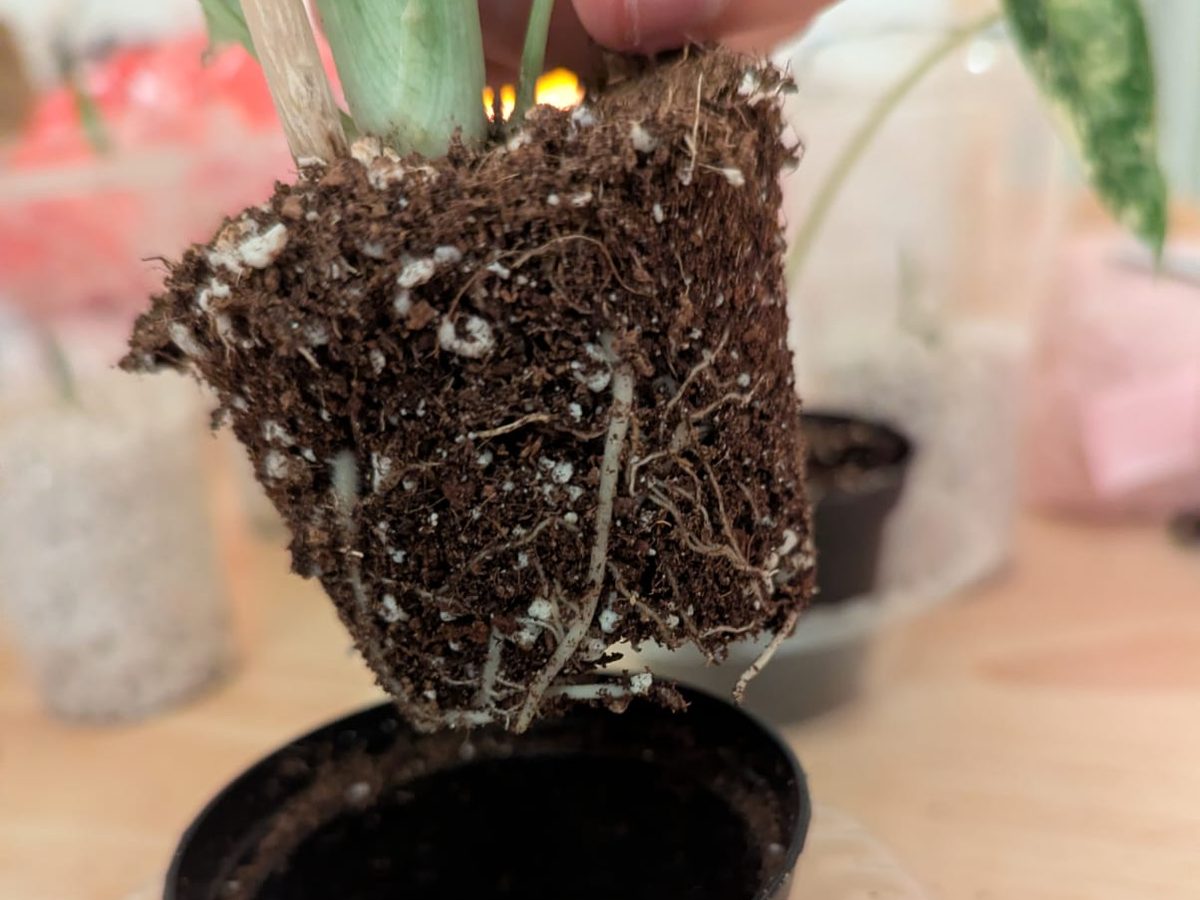
Most of our plants live in the same simple mix: half perlite, half coconut coir. The photo at the top of this post shows what that looks like from the inside, on a young plant we lifted out of its pot. Brown coir, white grains of perlite, pale roots running through both.
We like this mix a lot. It drains fast, holds air, and it is hard to drown a plant in it. But it has one catch that is easy to miss: there is almost nothing in it for the plant to eat. So we feed, and the way we do it is simple. We add a universal fertilizer every third watering.
Since we started, some of our plants have grown better, bigger and faster than before. Not every plant changed as much, but the difference on the ones that did was clear enough that we would not go back.
Why this mix needs feeding
A plant makes its own food from light, air and water. What it cannot make are the minerals: nitrogen, phosphorus, potassium, and the smaller amounts of calcium, magnesium, iron and the rest. In the wild, and in ordinary potting soil, those come from the soil itself.
Perlite and coir are different:
- Perlite is a volcanic mineral that has been heated until it puffs up. It is clean, light and full of air, and it has no nutrients to give at all.
- Coconut coir is the fibre from coconut husks. It holds water well and rewets easily, but it carries very little food of its own.
Many bags of ordinary potting soil also come with some fertilizer already mixed in, enough for the first weeks or months. A home made perlite and coir mix starts at zero. Whatever the plant needs to grow, it gets from you.
That is why we call feeding part of the deal with this mix. Without it, a plant can look fine for a while, living on what it already stored, and then the new leaves start to come out smaller and paler. Our post on reading the roots explains why we use the mix anyway.
Why every third watering, and not a date
Most fertilizer advice is written in time: every two weeks, once a month. We count waterings instead, and it has made feeding much easier to get right.
The reason is that a plant's need for food follows its growth, and its growth shows up in how fast it drinks. A plant in a bright spot, growing well, dries out quickly and gets watered often. A plant in a darker corner, or any plant in winter, grows slowly and drinks slowly.
Feeding on every third watering follows that on its own:
- A plant that is growing fast gets fed more often, because it is watered more often.
- A plant that is resting gets fed less, because it is watered less. In winter the feeds slow down without you having to remember to change anything.
- You never feed a plant that has not needed water. A dose of fertilizer into a mix that is still wet from last time is wasted at best.
The two waterings in between matter too. Plain water through the pot washes out some of the salts that fertilizer leaves behind. In a fast draining mix like ours, water runs straight through, which is exactly what you want for rinsing.
Why a universal fertilizer
We use a universal fertilizer, the general kind sold for all houseplants, rather than a different product for each plant. Two reasons.
First, it keeps things simple. With one bottle and one rule, there is nothing to look up and nothing to mix up.
Second, in a mix with no food of its own, you want something balanced. A universal fertilizer carries the three main nutrients in reasonable amounts, and a good one also lists the trace elements: magnesium, iron and the rest. In ordinary soil a plant can borrow those from the soil if the fertilizer lacks them. In perlite and coir it cannot, so they are worth looking for on the label.
Follow the dose on the bottle, or go a little weaker. A plant in a mix with no food of its own is fed often, and it is always easier to add more next time than to undo too much. Our general guide on how to fertilize houseplants covers what the numbers on the label mean and what too much looks like.
What changed for us
Better, bigger and faster is the honest short version. Some of our plants started to grow faster than they had before, and the new growth came out bigger. That is what you would expect from a plant that had been running short and finally had enough.
We are careful about the "some" in all of this. Not every plant responded the same way, and that is normal. A plant short of light, or with crowded roots, is held back by something food cannot fix. Fertilizer only helps a plant that has everything else it needs. Light first, a sensible pot, careful watering, and then food.
When to skip it
Every third watering is a rule, but a few plants sit outside it:
- Corms and new starts. The corms we started in perlite carry their own food for the first stage. We do not fertilize them.
- A plant that has just been repotted. New roots are tender, and the usual advice is to let a plant settle for a little while before it gets fertilizer again.
- A plant that is sick or rotting. Fertilizer will not rescue a plant with damaged roots, and it can make things worse. Fix the cause first. Our post on overwatering and underwatering helps if you are not sure what the problem is.
The short version
If your plants are in perlite and coir, or any mix you made yourself without compost or soil in it, they rely on you for every nutrient. Pick one universal fertilizer, use it at the label strength or a bit weaker, and add it every third watering. The plants that are growing will get more, the ones that are resting will get less, and you only have to remember one number.