Reading the roots: how we decide to repot
The leaves tell you a lot about a plant, but when it comes to repotting, the roots tell you the truth. Most of the time we decide whether a plant needs a bigger pot by looking at what is going on underneath.
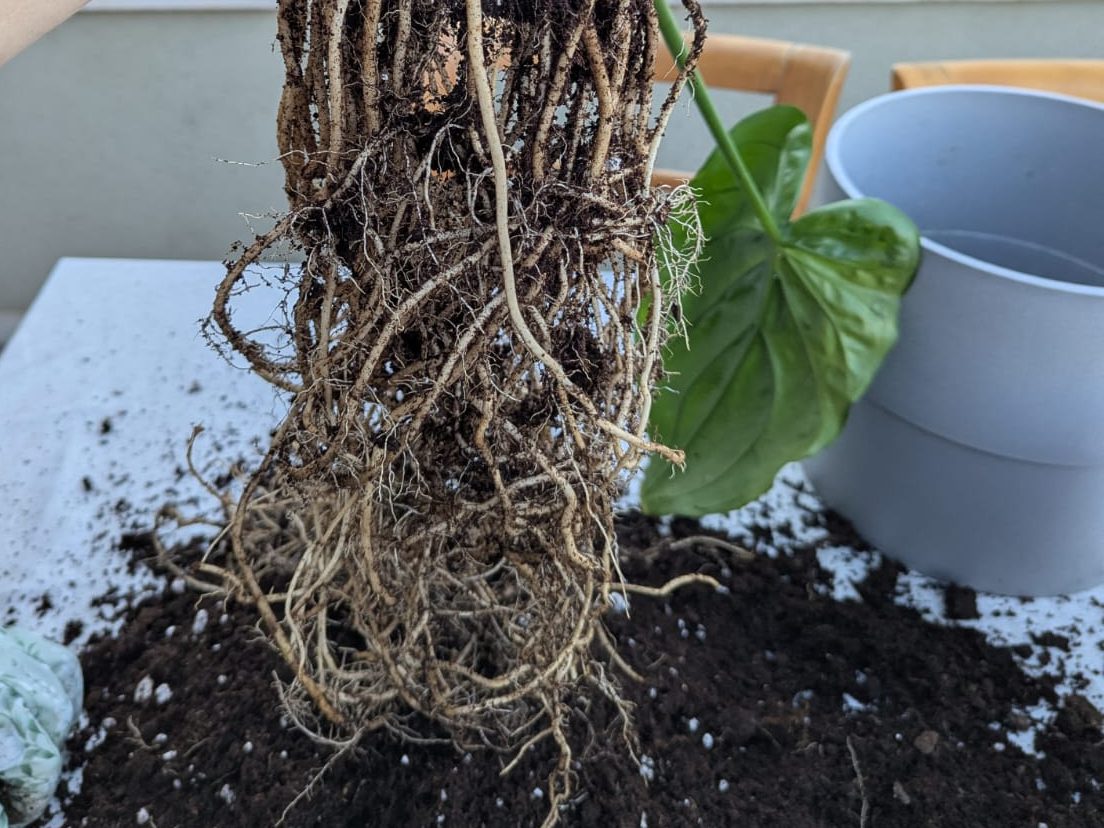
The photo at the top of this post is our Monstera, lifted out of its pot on repotting day. The root ball had become a dense, tangled mass of long pale roots, far more root than soil. That is a plant that has used up its pot.
Here is what we look for, the mix we use, and the one thing that mix asks of you afterwards.
The first sign: roots out of the bottom
The easiest signal costs nothing. Turn the pot over and look at the drainage holes.
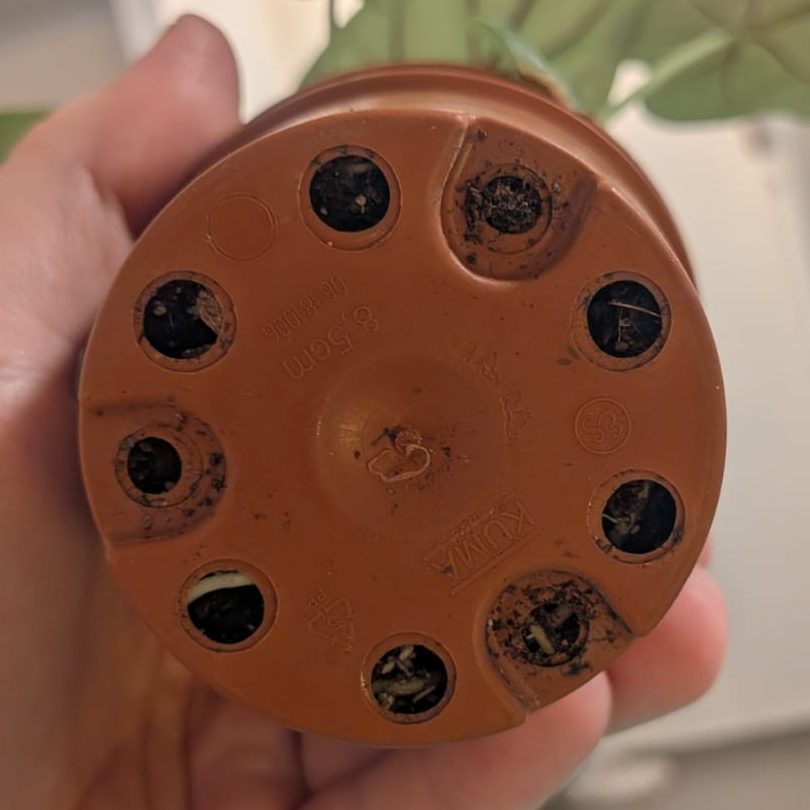
This is one of our small plants in an 8.5 cm nursery pot. Look at the holes: in several of them you can see pale roots pressing through. When roots reach the bottom and start leaving through the holes, they have run out of room inside.
One root poking out is not an emergency. Roots naturally head down towards the holes. But when several holes have roots in them, it is time to look closer.
The real check: slide it out
The surest way is to take the plant out of its pot and look. With a plastic nursery pot it is easy: squeeze the sides gently, turn it on its side, and ease the whole root ball out in one piece.
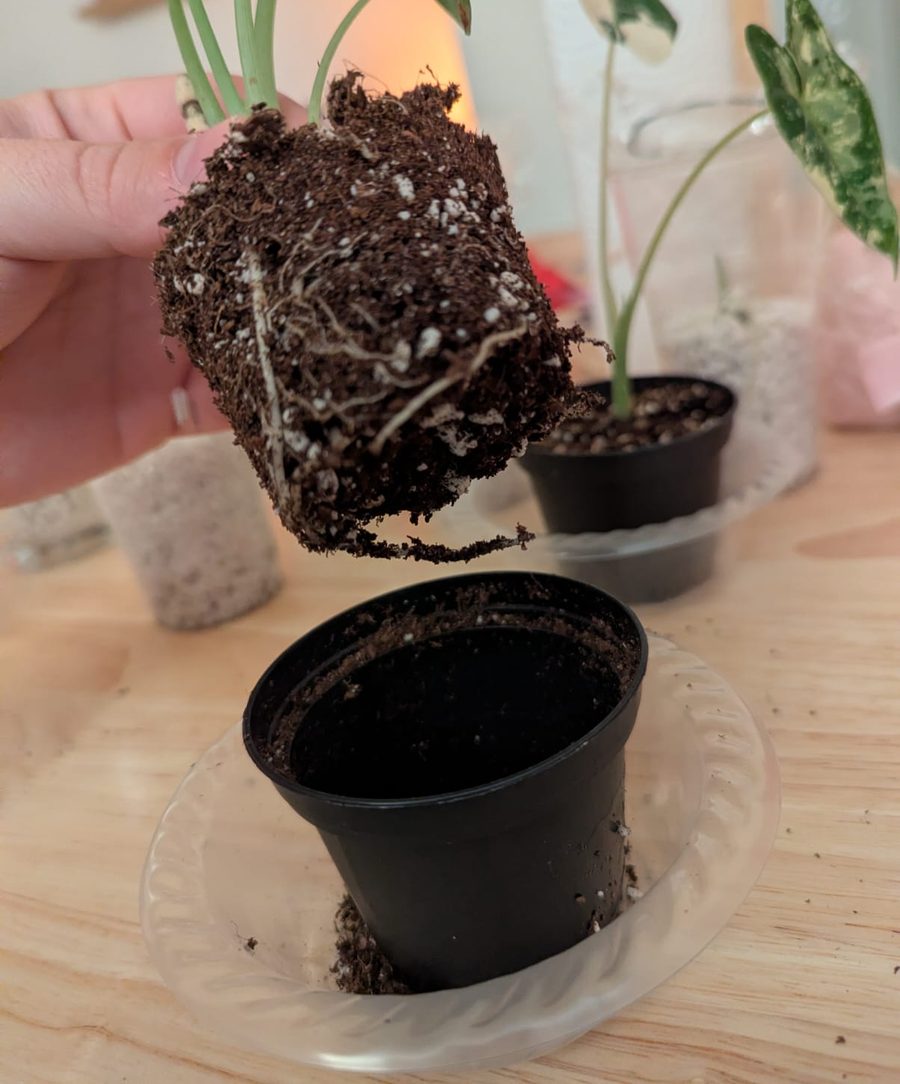
What you see tells you what to do:
- Mostly mix, a few roots. The plant has room. Put it back; it does not need a bigger pot yet.
- Roots all over the outside, but the mix still holds together. Getting close. The plant can go up one size soon, or now if it is the growing season.
- More root than mix, roots wrapped round and round. The plant is root bound. Repot it.
The photo above is somewhere in the middle: roots on the outside, but the ball is still mostly mix.
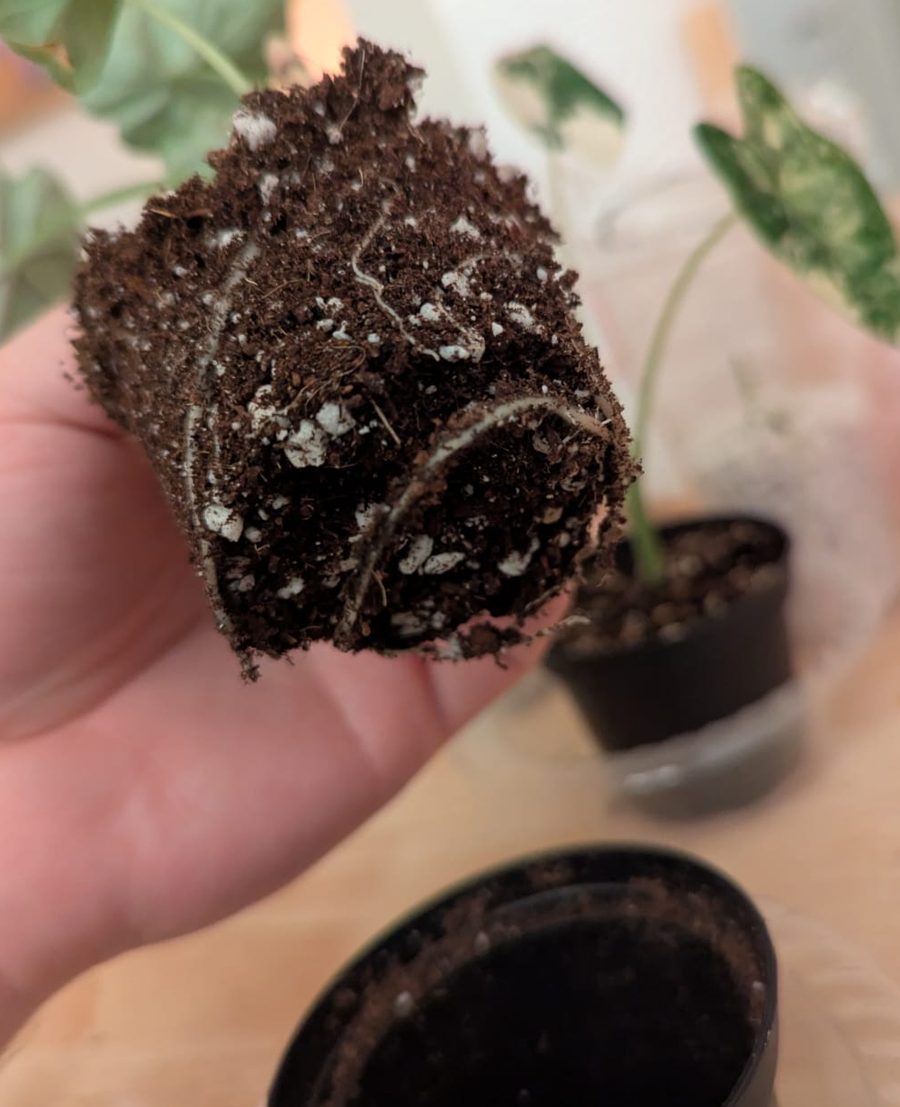
This one shows the thing to watch for. At the bottom, a root has followed the wall of the pot round in a circle. One root doing that is fine. When the whole bottom of the ball is a mat of circling roots, the plant is struggling for space, water runs through without soaking in, and the roots can start to strangle each other.
Do not let the roots get too crowded
This is our biggest lesson about roots: do not let them get too cluttered. A packed root ball causes problems that look like other problems. The mix dries out unevenly, water runs straight down the sides, the plant seems thirsty right after watering, and growth slows down.
On repotting day, if the roots are circling, loosen them gently with your fingers so they point outwards again. You do not have to untangle every one. The point is to encourage them to grow into the new mix instead of carrying on in a circle. A thick mass like our Monstera's is worth teasing apart at the bottom and sides before it goes into the new pot.
One size up, not three
When a plant needs a bigger pot, go up a little. For our small plants that means a few centimetres wider, not a pot twice the size.
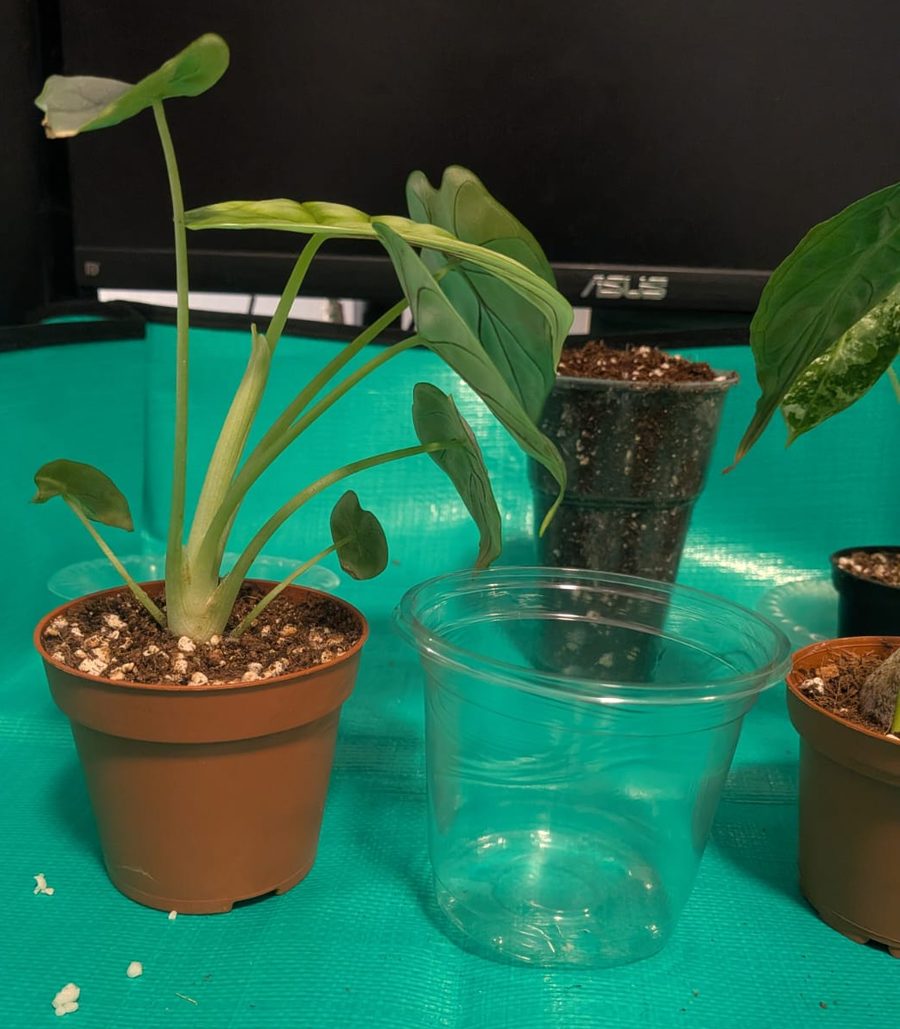
A huge pot holds far more mix than the roots can reach. That extra mix stays wet for a long time, and wet mix with no roots in it is exactly how root rot starts. Plants like Alocasias, which hate sitting wet, are especially sensitive to this. Our guide to choosing a pot covers sizes and drainage in more detail.
Our mix: half perlite, half coir
We use a simple mix for our plants: 50% perlite and 50% coconut coir.
- Perlite is the white granules you can see in every photo in this post. It keeps the mix light and full of air, and it drains fast.
- Coconut coir is made from coconut husk fibre. It holds water well and rewets easily after it dries out, which peat often does not.
Together they make a mix that holds enough water for the roots and plenty of air around them. It suits Alocasias and other aroids that hate heavy, wet soil.
The catch: you have to feed
Here is what the mix does not tell you on the bag: perlite and coir contain almost no food for the plant. Perlite is a mineral with no nutrients at all, and coir has very little. Ordinary potting soil usually comes with some fertilizer mixed in; this mix does not.
That means a plant in perlite and coir depends on you for everything it needs to grow. If you never fertilize, it will slowly run out, and the new leaves will come out smaller and paler. In this kind of mix, regular feeding during the growing season is not a bonus. It is part of the deal. We wrote up how we feed plants in this mix: a universal fertilizer every third watering.
When to repot
Spring and early summer are the best time, when the plant is growing and will fill the new mix quickly. If a plant is badly root bound, or the mix has gone sour, we would not wait for spring. Our general guide to repotting walks through the steps.
Before you buy a bigger pot, look at the roots. They will tell you whether you need one.