Propagating cuttings in water, step by step
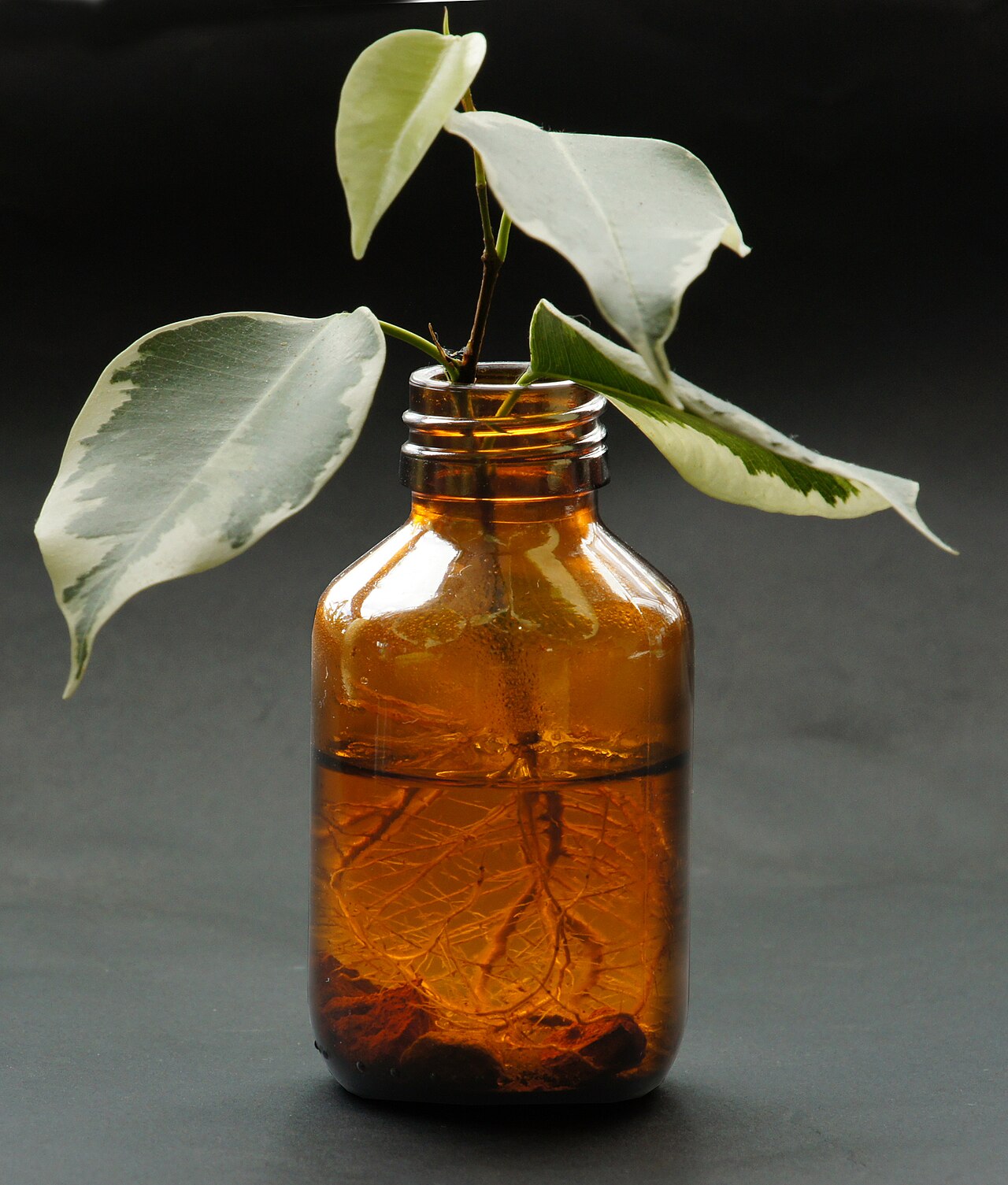
Taking a cutting from a plant you like and watching it grow roots in a glass of water is one of the nicest small jobs in plant care. It costs nothing, it needs no special kit, and you can see exactly what is happening. It also gives you a way to share plants with friends and to rescue a plant that has had a bad time.
Not every plant roots well in water, but many popular ones do. Here is how to do it and what to expect.
Plants that root well in water
These are known to root easily:
- Pothos and philodendron (the trailing kinds). See the pothos care guide.
- Monstera, from a stem piece with a node. See the monstera care guide.
- Tradescantia (inch plant, wandering jew)
- Coleus
- Ivy
- Spider plant, from the small plantlets on its long stems
- Begonia (many kinds)
- Impatiens
- Herbs such as mint and basil
Others, including succulents, cacti and snake plants, tend to rot in water and are better rooted in dry soil or left to callus first. The leaves of some plants, such as African violets, root better in soil or damp mix.
What you need
- A healthy parent plant
- Clean, sharp scissors or secateurs
- A clear glass or jar (clear lets you watch the roots and see the water level)
- Water at room temperature
- A bright spot without strong direct sun
How to take the cutting
- Choose a healthy stem. Avoid anything pale, damaged or diseased.
- Find a node. A node is a slightly swollen point on the stem where a leaf, and sometimes a little root, joins. Roots grow from nodes, so a cutting without one will not root.
- Cut just below a node. Make a clean cut. A piece with two to four leaves and one to three nodes is a good size.
- Remove the lower leaves. Any leaf that would sit under the water will rot and foul it. Keep the nodes in the water, and the remaining leaves above it.
Clean your scissors with rubbing alcohol or soapy water first. It reduces the chance of passing on disease.
Setting it up
Fill the glass with room-temperature water. Tap water is usually fine. If your tap water is very hard or heavily treated, you can let it stand overnight or use filtered water. Put the cutting in so the nodes are under water and the leaves are not.
Put the glass in bright, indirect light. A windowsill with filtered light is ideal. Direct sun can heat the water and encourage algae.
Looking after it
- Change the water every week or so, or when it turns cloudy. Fresh water has more oxygen and keeps bacteria down.
- Top up between changes if the level drops.
- Rinse the roots gently and clean the glass if slime appears.
- Be patient. Rooting takes time.
How long it takes
It varies. Some plants, such as tradescantia or coleus, show roots within a week or two. Pothos often shows roots in two to four weeks. Others, such as monstera, can take longer. Cooler, darker conditions slow it down. In winter, cuttings take their time. If a cutting is green and firm after several weeks, give it longer.
A cutting that turns brown and mushy at the cut end has rotted. Trim above the rot, refresh the water and try again with the healthy part.
When to move it to soil
Roots grown in water are a bit different from soil roots: thinner and more delicate. They can adapt to soil, but a plant left in water for a very long time can find the move harder.
A common approach is to pot the cutting once the roots are a few centimetres (about an inch or two) long, and before they grow very long and tangled. Plants can also live in water for a long time with a little liquid fertilizer, but most do better in soil.
To pot it up:
- Fill a small pot, with drainage holes, with a light, well-draining mix. See choosing a pot and drainage.
- Make a hole, lower the roots in and lightly firm the soil around them.
- Water well, then let it drain.
- Keep the soil lightly moist, not wet, for the first couple of weeks while the roots adapt.
- Keep it out of strong sun, and be gentle with it as it settles.
You may notice some leaves yellowing or drooping after the move. That is transplant shock, and it usually passes.
Common problems
Cutting turns black or mushy. Rot from a dirty glass, a rotting leaf in the water or too little light. Cut away the damage, clean the glass and change the water.
No roots after a long time. The cutting may lack a node, the room may be cold or dim, or the plant may not suit water propagation. Try another cutting in a warmer, brighter spot.
Slimy water. Change it more often and rinse the roots.
Green algae in the glass. Keep it out of direct sun, or use an opaque container.
Tiny flies after potting. Fresh, damp soil can bring fungus gnats. See the fungus gnats guide.
Aftercare
A new plant needs the same basic attention as a mature one, with less food and less water. Check the soil rather than following a schedule (see the guide to how often to water). Don't feed it until it shows new growth. The fertilizing guide explains when and how much.
A good time to do it
Spring and early summer are the best months, since plants are in active growth and cuttings root faster. You can propagate in autumn and winter too, but expect it to be slower. Pruning a leggy plant is a perfect moment to take cuttings, so nothing goes to waste.