Monstera care for a healthy, splitting plant
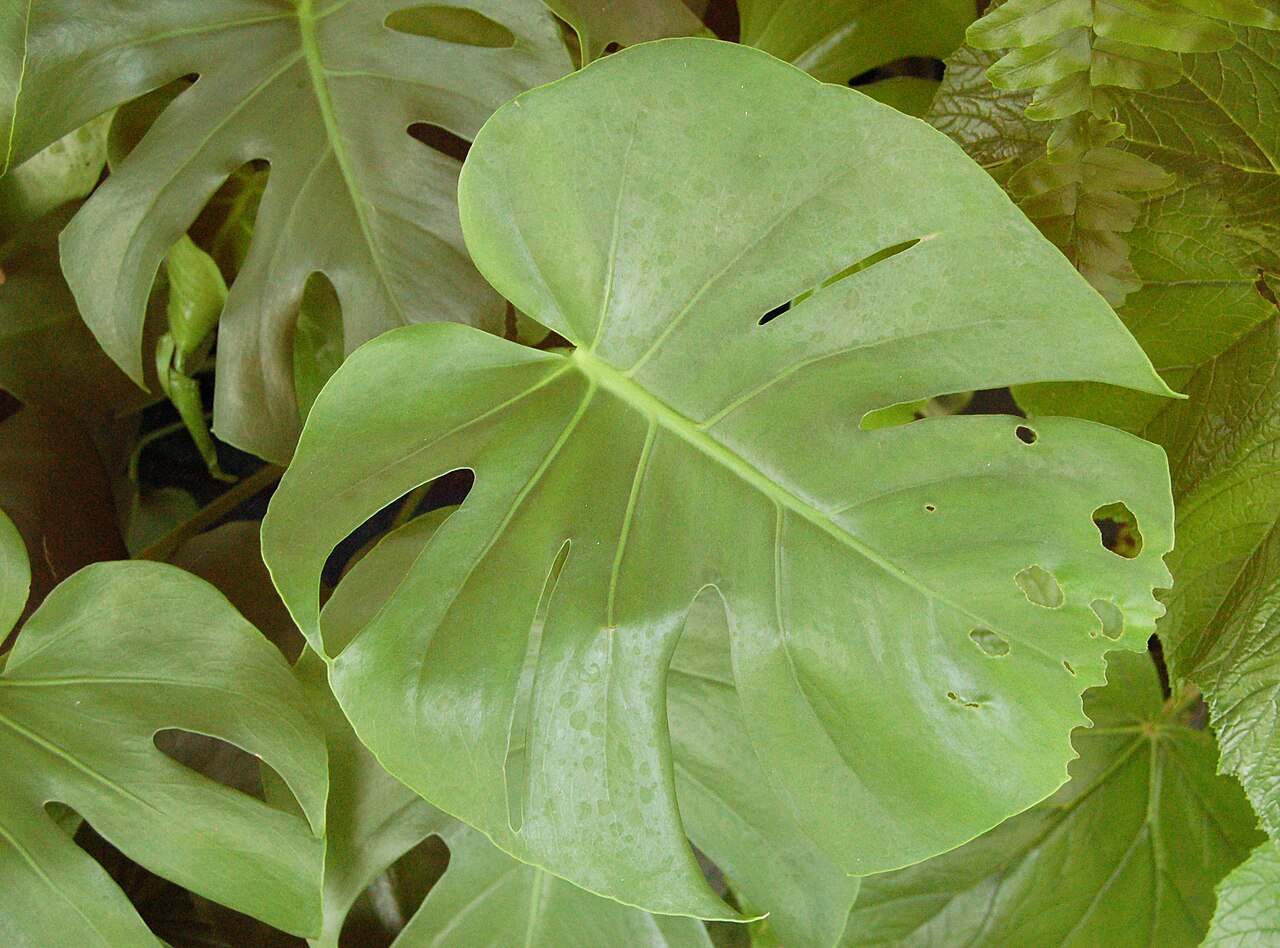
The monstera, often called the Swiss cheese plant, is one of the most recognisable houseplants. Its big, glossy leaves develop splits and holes as the plant matures, and a happy one can grow quickly and fill a corner. Most people buy Monstera deliciosa, though there are other kinds.
It has a reputation for being easy, and it is, as long as you give it a few things it asks for: good light, a pot that drains, water only when it needs it, and something to climb. Here is how to look after one.
Light
Monstera does best in bright, indirect light. Put it near a window, but out of hot direct sun, which can scorch the leaves. It will survive in medium light, but growth is slower and new leaves are smaller.
Light also affects the famous splits. Young leaves are often whole, and the splits (called fenestrations) appear as the plant grows larger and receives enough light. A plant in a dim corner may keep making plain, heart-shaped leaves. If your monstera is healthy but never splits, more light and a support to climb are the first things to try.
Watering
Let the top few centimetres (an inch or two) of soil dry out, then water thoroughly until it drains from the bottom. Empty the saucer afterwards.
Signs to read:
- Drooping, curling leaves with dry soil: it is thirsty. Water and it will usually recover.
- Yellow leaves with soil that stays wet: too much water. Wait longer between drinks.
- Brown, crispy edges: often dry soil for too long, sometimes dry air.
In winter the plant slows down, so water less often but still check the soil. The guide to how often to water houseplants explains how, and houseplant care in winter covers the season.
Soil and pot
Monstera likes a chunky, airy mix that holds some moisture but drains quickly. A general potting mix with extra perlite or bark works well. The roots of a monstera are strong and can grow thick, and they dislike sitting wet.
A pot with drainage holes is a must. Pick one a size or two bigger than the root ball when repotting, since an oversized pot holds wet soil for too long. See choosing a pot and drainage.
Support and aerial roots
In nature monstera climbs trees. At home it grows best with something to climb: a moss pole, a coir pole or a sturdy stake. The stem attaches, the leaves grow bigger, and the plant stands upright rather than flopping.
You may notice brown, stringy roots growing from the stem. These are aerial roots, and they are normal. You can guide them toward the pole or into the soil, or leave them. Cutting them off occasionally is fine if they bother you, but they help the plant to climb and take up some moisture.
Tie the stem loosely to the pole with soft ties, and adjust as it grows.
Feeding
During spring and summer, when the plant is putting out new leaves, feed lightly with a balanced houseplant fertilizer, diluted to half the strength on the label, about once a month. Skip it in autumn and winter. The fertilizing guide has more detail.
Humidity and temperature
Monstera is a tropical plant but copes well with ordinary home humidity. Keep it away from cold draughts and from heaters. Normal room temperatures, comfortable for you, are comfortable for it.
Wiping the big leaves with a damp cloth every few weeks removes dust, helps the leaves take in light, and lets you spot pests early.
Repotting
A fast-growing monstera may need repotting every year or two. Signs include roots coming out of the drainage holes, soil that dries within a day or two, and a plant that is top-heavy and tips over. Repot in spring or early summer, into a pot one size up, with fresh mix. The repotting guide walks through it.
Pruning and propagating
You can trim a monstera to control its size or to remove a damaged leaf. Cut cleanly with sharp, clean scissors.
To make a new plant, cut a piece of stem with at least one node, which is the bump on the stem where a leaf and an aerial root grow. A cutting with a node and a leaf can root in water or damp moss. A leaf alone, without a node, will not grow into a new plant. The guide to propagating cuttings in water shows the method.
Common problems
Yellow leaves. Usually too much water, sometimes an old leaf at the end of its life. See yellow leaves on houseplants.
Brown spots. Could be sun scorch, a watering problem or a fungal spot from leaves staying wet. Look at the pattern: edges suggest dryness, patches in the middle suggest sun or damp.
No splits. More light, a pole to climb and time.
Leggy growth. Too little light.
Small insects or fine webbing. Check for fungus gnats in wet soil (see the fungus gnats guide) or spider mites on leaves (see the spider mites guide).
A safety note
Monstera leaves and stems contain compounds that can irritate the mouth if chewed, and are considered toxic to pets and people if eaten. Keep it away from curious pets and children, and talk to a vet or doctor if some has been eaten.
Keep it simple
Bright indirect light, a drink when the top of the soil is dry, a pole to climb and a little food in the growing season: that covers nearly everything. Watch for the signs, adjust slowly, and the plant will keep rewarding you with bigger leaves.